


Meet Sean Kim, the artist and founder behind Brooklyn-based 3D-printed homeware company Wooj. In the fourth edition of our Artist Spotlight Series, discover Sean's design process, how he balances organization and inspiration, and how Wooj products get from idea to finished product.


Meet Sean Kim, founder and artist behind Wooj, the Brooklyn 3D-printing home goods studio that turned a single torn lamp shade into a full catalog of local, small-batch lighting and home goods.
For the fourth edition of the Yamazaki Home Artist Spotlight Series, we visited Sean in his Brooklyn studio, where rows of printers run around the clock turning out wavy lamps, pleated forms, and cordless lighting.

In honor of the fourth edition of our Artist Spotlight Series, we are partnering with Wooj for a one-of-a-kind giveaway! From 9/17-9/30, enter for a chance to win our best-selling Tall Side Table and a Wooj Cordless Mini Wavy Lamp. Enter here →
Growing Up: Early Inspiration
Sean grew up in Newport Beach, California, where he says he "didn't look like anyone there" and didn't always find it easy to express himself in conventional ways.
Making things filled that gap: origami, drawing, and, from a young age, tinkering with small business ideas on the family computer. Using KidPix, an early kids' version of Photoshop, he once produced a "Family Newspaper" and tried to sell it to relatives for a dollar a copy.
No one else in his family worked in a creative or hands-on field, the instinct was entirely his own. "I was also always interested in merging art and commerce," he says, "so design ended up being a pretty perfect place for me to end up working, though it would be many years before that happened."
A Torn Noguchi Lamp
Every Wooj piece traces back to one happy accident. While finishing his master's in industrial design at Pratt, an educational path that took him through psychology and four years as a programmer, Sean bought a lamp at the Noguchi Museum, just before COVID hit. It arrived home torn, right at the seam where the washi paper meets the hardware ring. The museum sent a replacement and told him to keep the damaged one.

With art school suddenly online, Sean used the leftover hardware as a base and printed his own replacement shade. "That was the first time I had seen a printer make something so tangibly useful and beautiful," he says.
He reworked the design so it didn't need an expensive Noguchi base, friends asked to buy one, a few ads followed, and the Wavy Lamp, and Wooj, took off. "The first launch really just happened organically."
Technique First
Sean's process rarely starts with a product, it starts with a technique. The Wavy Lamp came from learning parametric design software; the Pleat Lamp from misusing fashion draping software to generate 3D-printable forms; the newer sconces from playing with unusually thick layer lines.

"The technique dictates the final product," he says. "I often don't know what I'm going to get before I start."
Making everything in-house means Wooj can prototype and manufacture almost simultaneously, trying far more products and variations than a studio locked into tooling and minimum order quantities ever could.
"If something doesn't do amazingly, we haven't expended anything on molding or tooling. We just won't print it." That same process variability is where Wooj's "seconds" market comes from: pieces just shy of production grade, an idea Sean borrowed from a neighboring ceramicist at Wooj’s old studio.
Yamazaki Home in the Wooj Studio and at Home
Nearly all of Wooj's square footage is committed to 3D printer production, packing, and materials, so the Yamazaki Home pieces that make the cut really have to earn their place.
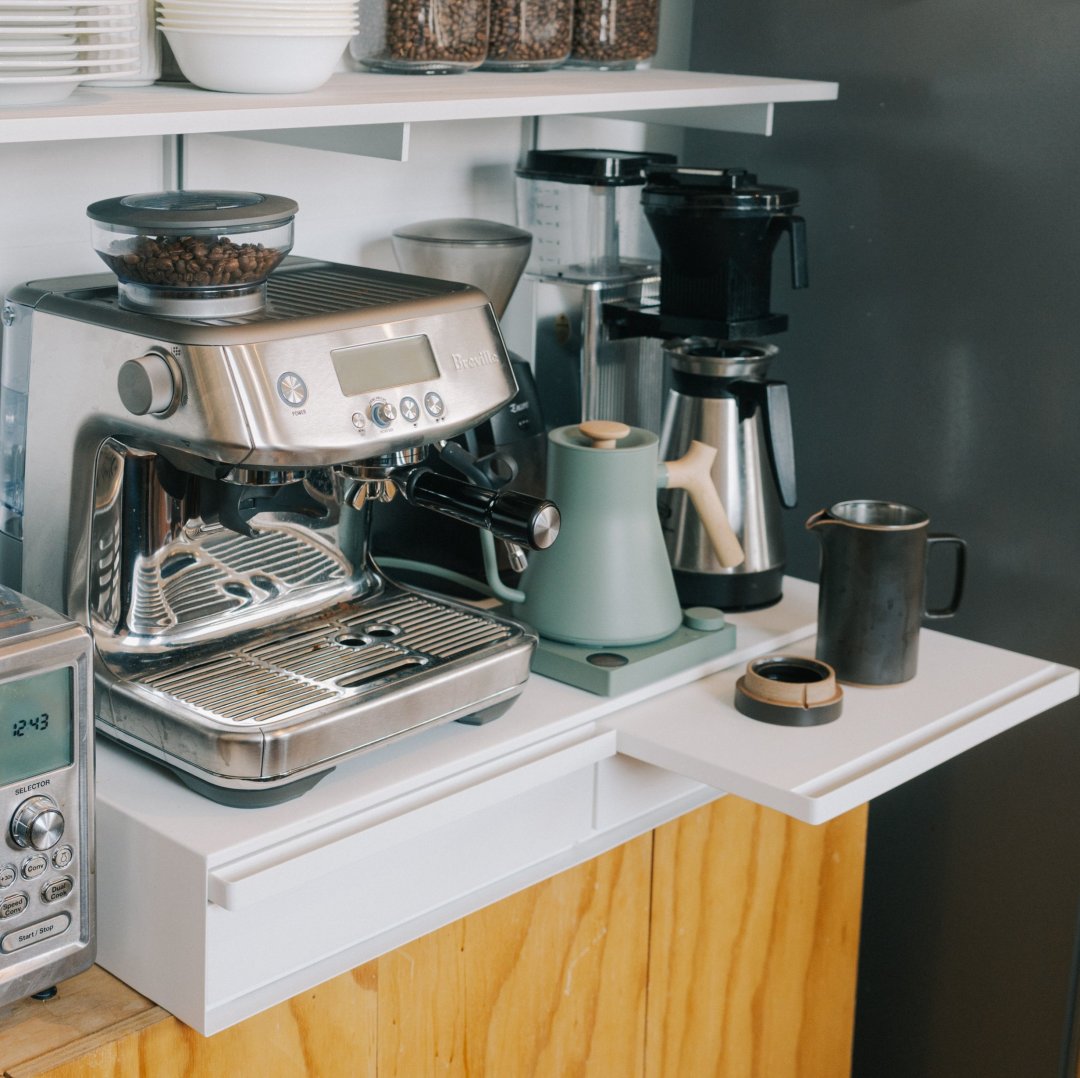
They use our fan-favorite Countertop Drawer at their coffee and tea station. The area "has gotten busy. It holds everything that used to be crowding the counter, and it still gives you the counter back on top of it. Two zones out of the same footprint.”
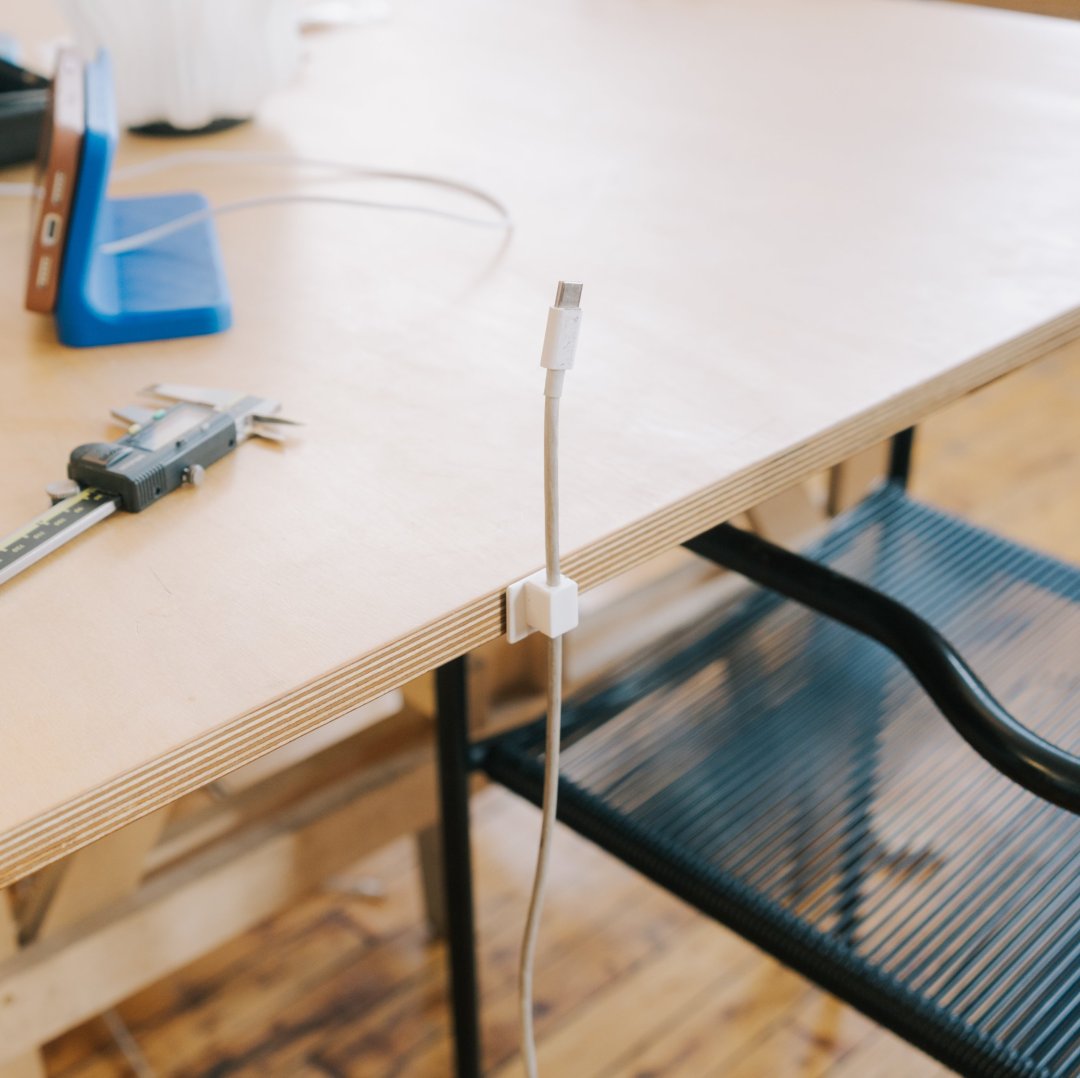
“The Magnetic Cable Holders solved something that has been driving me crazy for a long time. There is a rat's nest of cables under our communal desk and I think this should fix it!”
At home, Sean uses the Rolling Storage Cart in a narrow gap in his bathroom. "Narrow is the constraint — we don't have much space, so the fact that [the Rolling Cart] is tall and thin is the reason it works at all."
Balancing Creativity and Organization
The production areas at Wooj's studios, Sean says, really have to stay organized. "If it doesn't have a location, it becomes a problem within a day." When it comes to in-studio design and creative ideation, Sean takes the opposite approach: prototypes and failures stay out in the open.
Sean said, “Design is different. I want prototypes out where I can see them, including the failed ones, because a form I abandoned six months ago will sometimes solve a problem I hit today. If I file all of that away I lose the ability to make that connection. So my design corner is more cluttered than the rest of the space, deliberately.”
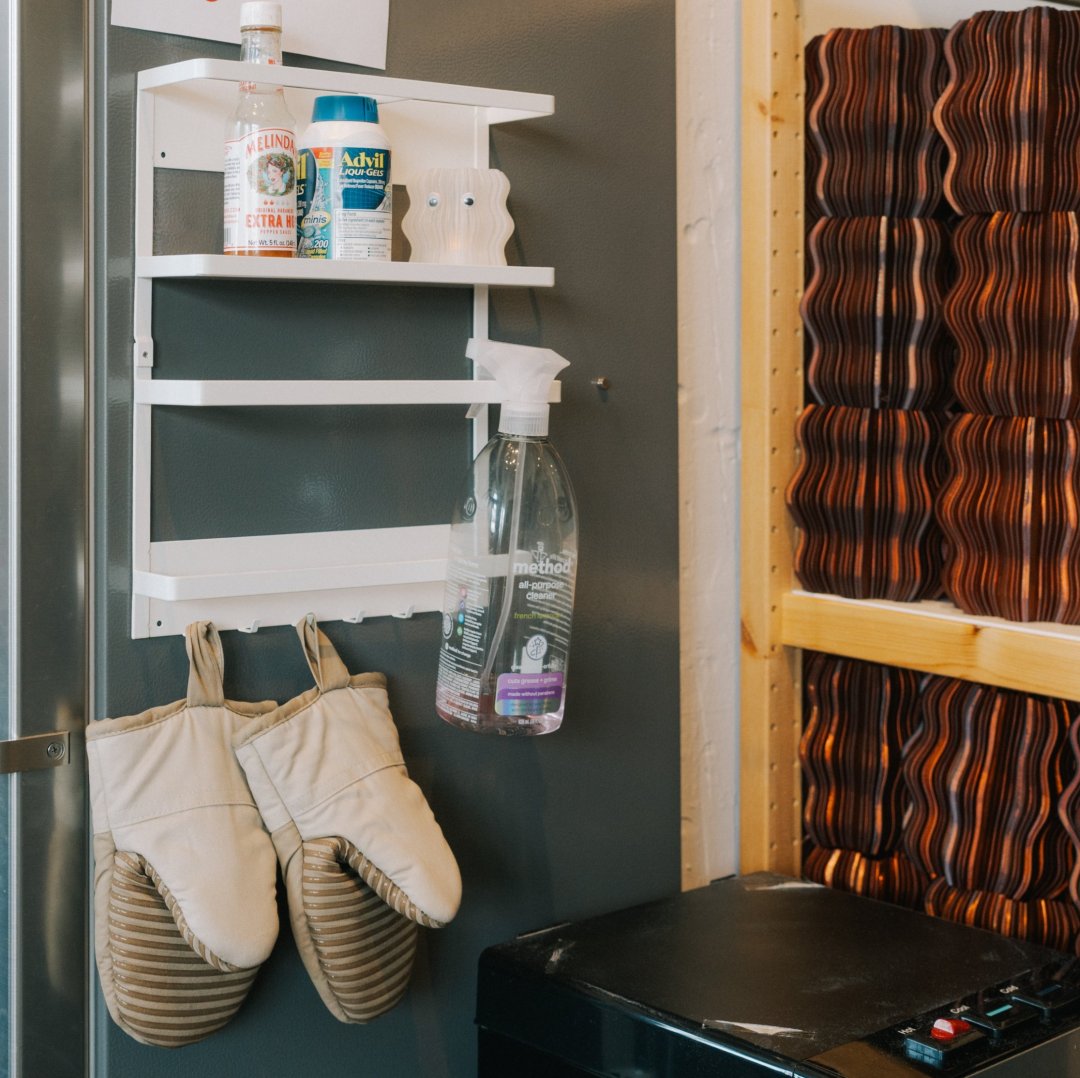
At home Sean appreciates that the Yamazaki Home catalog is one system. He said, “There is a lovely visual language across dozens of products that do completely unrelated things. We think about our catalog the same way. We build platforms (lamp bases) and design a lot of products on top of them, because that's what keeps a small company's costs sane and its output coherent.”
“The Countertop Drawer is the one I keep thinking about.” Sean said. “It doesn't add storage to a room, it adds storage to a surface you already had, and you keep the surface. That's the kind of solution I like. It doesn't ask for anything new from the space.”
Staying Small On Purpose
Wooj has never taken outside financing. "We're completely homegrown, and that allows us to dictate to ourselves how we want to grow," Sean says.
"We're not beholden to anyone pushing aggressive growth targets." A healthy size, to him, means paying everyone a reasonable salary and keeping a savings buffer.
His biggest leap so far has been speccing and developing a cordless lamp base with outside vendors. The base is the first Wooj sourced from outside vendors rather than printing in-house. "It's the backbone of a lot of our business now," Sean says. The cordless base they created is now compatible with roughly half their existing catalog and has pushed the Wooj team to consider modularity as part of their design process.
Enter the Giveaway
Don't forget to enter the Yamazaki Home x Wooj Giveaway (9/17–9/30) for a chance to win a Yamazaki Home Tall Side Table and Wooj Cordless Mini Wavy Lamp. Enter here →
From a torn lamp shade to a full studio, Sean's story is a reminder that good design often starts with paying attention to what's right in front of you. We're grateful he let us into his process and his workspace for this one.
Catch up on the rest of the Yamazaki Home Artist Spotlight Series and watch the full video interview and studio tour with Sean below.
Blog
Yamazaki Stories:
A Blog By Us, For You


